Satellite manufacturing is expanding in California, even as high costs, strict regulation and competition from other US states continue to challenge the state’s position as a centre for space technology.
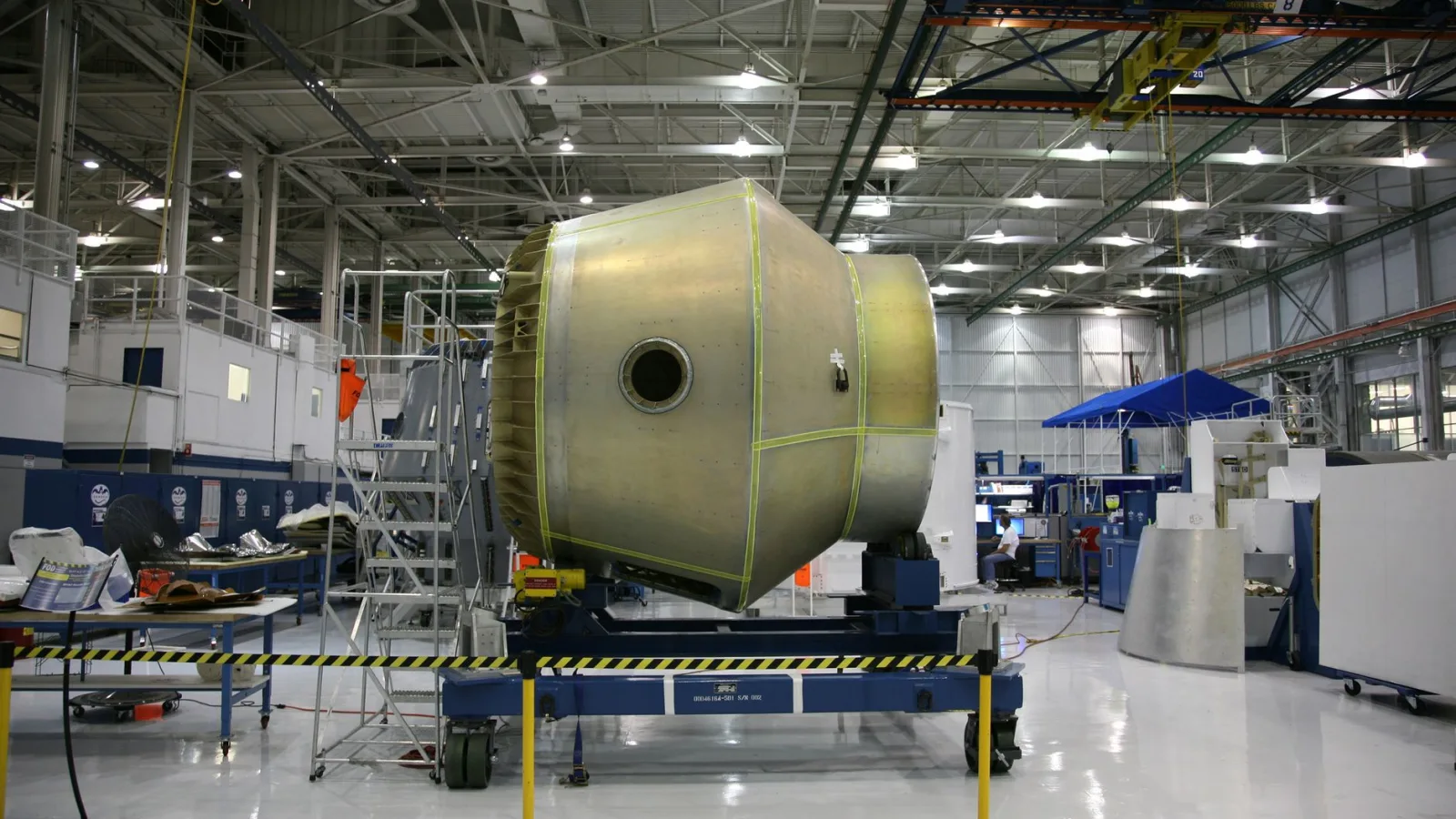
The latest sign of that growth came in June, when Muon Space opened a manufacturing facility in San Jose. State and local officials, along with representatives from the United States Space Force and the Pentagon, attended the ribbon-cutting ceremony for the 12,000-square-metre plant, where the company is preparing to produce up to 500 satellites a year.
Muon chief executive Jonny Dyer described the expansion in San Jose as “a strategic choice”, citing access to aerospace, software, artificial intelligence and manufacturing talent, as well as a dense supplier network and proximity to customers and partners.
He said the San Jose area had “a deep talent pool in high-mix hardware manufacturing”, while the wider Bay Area had “a long history of scaled satellite production”.
That history includes Lockheed Martin’s long-running work in Sunnyvale, about 20 miles from San Jose, where it has produced satellites, payloads and subsystems for decades. Lockheed Martin’s presence in the area dates back to aircraft maintenance at Moffett Field during the Second World War. Lanteris Space Systems, formerly Maxar, has also assembled, integrated and tested spacecraft nearby.
“This ecosystem allows us to move faster from design to production and continuously iterate as mission requirements evolve,” Dyer said.
California’s space-technology reputation has faced pressure in recent years after several high-profile companies announced moves out of the state. Aerojet Rocketdyne, SpaceX, Made in Space and Orbit Fab all said they planned to relocate headquarters or manufacturing elsewhere. In some cases, company leaders pointed to California’s cost of living, regulation and incentives available in states such as Colorado, Florida and Texas.
Satellite manufacturing has since grown in Colorado, Florida, Texas and Washington. But California has also continued to attract and expand space manufacturing. Over the past three years, companies including Aerospacelab, Apex, Astranis, K2 Space, Millennium Space Systems, Muon, Terran Orbital, True Anomaly, Umbra and Xona Space Systems have opened manufacturing plants in California or expanded existing sites.
The broader manufacturing base remains significant. California, with around 40 million people and a 2025 gross domestic product of $4.3tn, ranked first among US states for manufacturing sector employees in the 2022 census, the most recent national analysis cited in the source material.
The growth is not limited to satellites. Vast commercial space stations, Rocket Lab engines and Relativity Space rockets are produced in Long Beach, in Los Angeles County.
Emily Desai, chief deputy director at Governor Gavin Newsom’s Office of Business and Economic Development, known as GO-Biz, said California’s aerospace legacy continued to shape the sector. “California played a key part in building the modern aerospace economy. That is the foundation that we build on today,” she said.
Executives and investors said the state’s main advantage remains its workforce. Van Espahbodi, general partner at Generational Partners and a co-founder and former managing partner of Starburst Aerospace, said Southern California continued to have the largest concentration of non-software engineering talent.
“Even though it’s an expensive place to build a space company, it can be even more expensive to build one without the right people,” he said. “Fundamentally, you go where the talent is.”
According to Desai, California’s workforce includes 10,000 aerospace engineers, along with specialists in areas such as quantum computing, artificial intelligence and semiconductors.
Brian Manning, co-founder and chief executive of Xona, a precision positioning, navigation and timing start-up, said modern satellites require skills that are strongly represented in the Bay Area. “If you open up a satellite and look at it, what you’re going to see looks a lot more like the inside of a desktop computer than it does a 747” airliner, he said. “It’s a computer that we launch into space.”
Karan Kunjur, co-founder and chief executive of K2 Space, said Southern California also benefits from technician talent. He said the greater Los Angeles area had a deep pool of technicians who were “foundational to building any major aerospace company”. Aerospace companies in the region have also worked with community colleges on training for welders, electricians and other advanced manufacturing trades.
Funding is another draw. More than 2,000 venture capital firms are based in California, including prominent space investors. While those firms invest globally, industry figures said physical proximity still helps entrepreneurs build relationships with investors.
A report prepared for GO-Biz by economic modelling firm Lightcast found that one-third of US space-technology companies are in California. It also said more than half of US venture capital funding for space technology over the past five years went to California companies.
California officials say the state does not try to compete by offering large financing packages. “We don’t write blank checks,” Desai said. Instead, California uses tax incentives tied to hiring and investment.
In June, Governor Newsom awarded a $32.75m California Competes Tax Credit to Vast, linked to the creation of 657 new jobs and $87m in spending to expand research, development and manufacturing facilities in Southern California. Apex received a $24m tax credit in April, while True Anomaly obtained a $12.7m credit in 2025 for investment in satellite manufacturing and workforce expansion.
Companies also cite proximity to customers and partners. Ian Cinnamon, chief executive and co-founder of Apex, said Los Angeles was “one of the centres of the global space industry”. He said engineers, technicians, suppliers, customers and experienced operators were already based there, which mattered when scaling aerospace manufacturing.
Government space activity is also concentrated in the state. Space Systems Command, the US Space Force acquisition arm, is based in Los Angeles and managed a $15bn budget in 2025. California also houses three of NASA’s 10 centres: the Jet Propulsion Laboratory, Ames Research Center and Armstrong Flight Research Center.
Access to Vandenberg Space Force Base on California’s Central Coast is another advantage for space companies. To support increased demand for launch capacity, California awarded $9.5m to REACH, a Central Coast economic-action coalition, for Vandenberg infrastructure and workforce development.
Those measures are linked to the California Jobs First Economic Blueprint, published in 2025, which identified aerospace as a strategic sector. Desai said space, defence and satellites were selected because of the sector’s legacy and future direction in the state.
Costs remain a concern, particularly real estate and the cost of living. But smaller satellites have changed the type of space required for production. Mark Matossian, founder and managing partner of Whipsmart Ventures and a former Iceye US chief executive, said companies can now build constellations in one-storey Silicon Valley office parks.
He said Terra Bella, an Earth observation satellite start-up later acquired by Planet Labs, used a mobile clean room, while Iceye built satellites in a converted conference room. With around 16% of Silicon Valley office space vacant after the pandemic, he said empty office buildings had created new options for manufacturers.
Xona is among the companies taking advantage of the region. In April, it invited guests to a new facility in Burlingame, south of San Francisco, where it manufactures satellites and payloads for the Pulsar global navigation satellite system constellation. Manning said the company benefits from being close to Bay Area firms developing autonomous vehicles, robotics, AI logistics, device trackers and mobile phones that could adopt Xona technology.
Universities also continue to feed the sector. Stanford University, the California Institute of Technology, the University of Southern California, California Polytechnic State University and University of California campuses produce engineers and entrepreneurs for established aerospace companies and start-ups.
David Barnhart, director of the USC Space Engineering Research Center, said university talent was part of the manufacturing growth in Los Angeles. He said complaints about the high cost of living and doing business in California were generally outweighed by advantages such as suppliers, vendors and spacecraft integrators.
“That allows companies to move very fast,” Barnhart said.