Eight German state premiers have publicly affirmed their support for Chancellor Friedrich Merz, as his leadership of the Christian Democratic Union (CDU) and the nation faces increasing scrutiny amid declining approval ratings and a surge in support for the far-right Alternative for Germany (AfD).
The premiers, all members of Merz's CDU party, jointly wrote that restoring trust in their party required "listening and taking political action, not in debates over personnel." This statement comes as speculation mounts regarding Merz's viability as a leader, particularly with two significant state elections scheduled for Sunday, seen as critical tests of his authority.
Mr Merz, who has been in the post for just 16 months, is contending with poor public approval, with a recent Bild poll indicating that only 14% of respondents believe he is suitable for the role. This personal unpopularity coincides with the AfD making substantial gains, leading to questions about whether the Chancellor has become an electoral liability for the conservatives.
Rumours of a "Kanzlertausch," or "Chancellor swap," have circulated for several months but gained considerable momentum following the CDU's distant second-place finish behind the AfD in the eastern state of Saxony-Anhalt at the start of September. In that election, the AfD secured 43.8% of the vote, while the CDU plummeted to 17.2%. This marked a historic moment, as it was the first time since the Second World War that a far-right party had come close to controlling a German state. The AfD currently remains three seats short of an outright majority, and while mainstream parties have ruled out a coalition, it could potentially seek to form a minority government.
Following the significant loss in Saxony-Anhalt, Mr Merz adopted a combative stance against the AfD, describing them as a "destructive force" and claiming their migration policy amounted to an "ethnic cleansing" of skilled workers. The AfD promptly responded by announcing it would file a defamation complaint against the Chancellor, labelling his remarks as "baseless" and "disgusting."
Despite the mounting pressure, Mr Merz has affirmed his commitment to continue in his role. However, his abrasive communication style and low personal approval have intensified concerns within political circles regarding his long-term leadership.
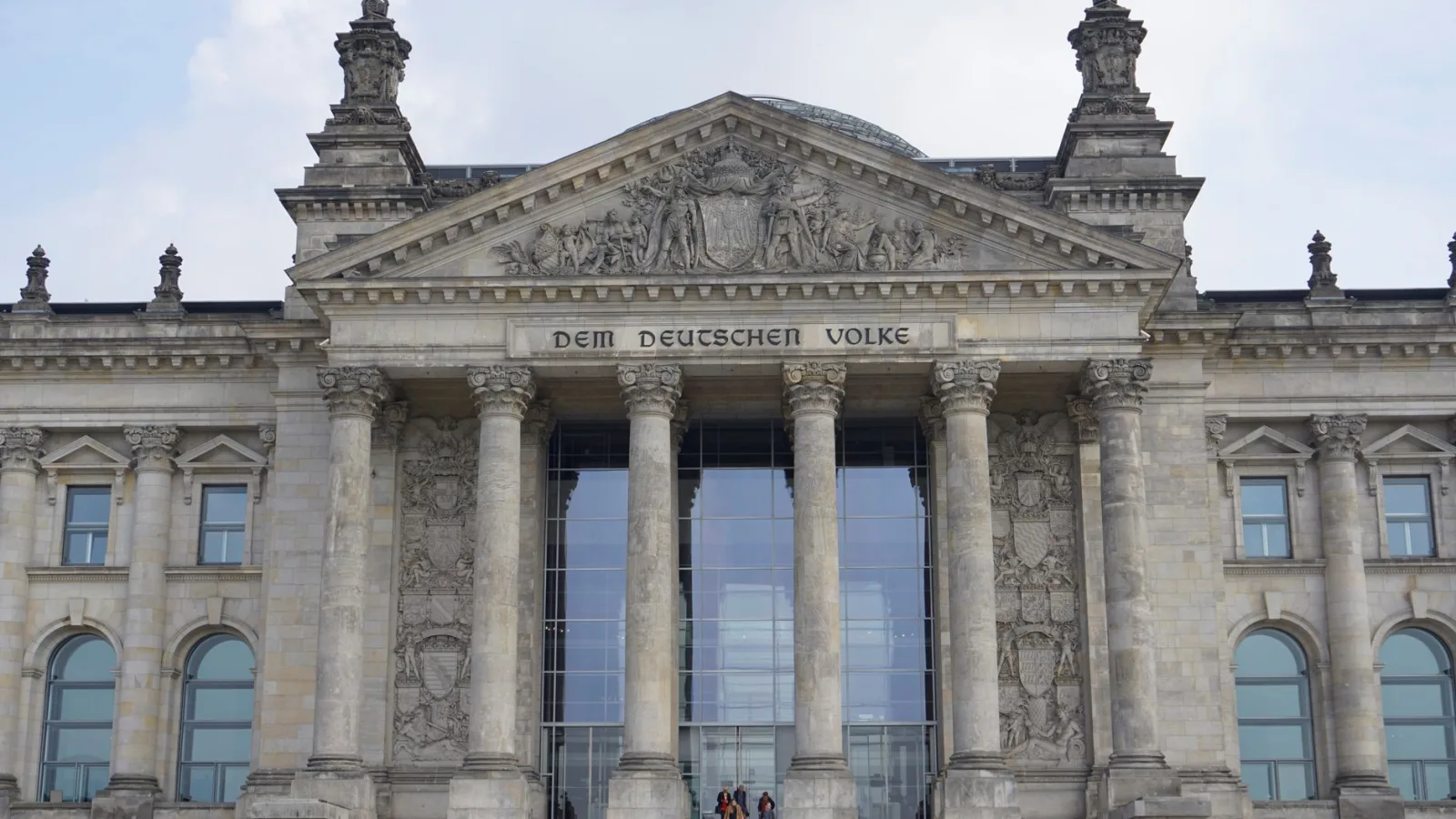
The eight CDU state premiers, including those from Schleswig-Holstein, Saxony, Hesse, Rhineland-Palatinate, Saxony-Anhalt, Thuringia, Berlin, and North Rhine-Westphalia, emphasised the need for stability. They stated, "Now more than ever, Germany's political landscape needs stability," adding that "Our country will continue to need a stable and effective federal government with its own majority in the Bundestag [German parliament]." This collective backing follows an earlier show of support from Markus Söder, the premier of Bavaria and leader of the CDU's sister party, the CSU.
Attention is now fixed on Sunday's state elections in Berlin and Mecklenburg-West Pomerania, where the AfD is projected to make further gains, potentially at the expense of the CDU. An unnamed party source, speaking to news agency Reuters, indicated that CDU officials are scheduled to convene on Sunday to coordinate the party's response to the results.
Polls suggest a more closely contested race in Berlin compared to Saxony-Anhalt, with the CDU and Die Linke (The Left) currently vying for the top spot, closely followed by the AfD and the Greens. In Mecklenburg-West Pomerania, the AfD is polling ahead of the centre-left SPD but is widely expected to fall short of securing an outright majority.
A worst-case scenario for Mr Merz would involve the CDU losing power in Berlin and failing to secure sufficient votes to gain representation in Mecklenburg-West Pomerania's parliament. Germany does not have a strong tradition of replacing its leader mid-term, unlike the UK. Nevertheless, Mr Merz could, in theory, face pressure to resign or a vote of no confidence, though many observers currently deem such an outcome unlikely.
While no immediate challenger has emerged from within the CDU, the heightened speculation surrounding Merz's future has led to several prominent figures being cited as potential successors. These include Markus Söder, North Rhine-Westphalia premier Hendrik Wüst, and German Interior Minister Alexander Dobrindt.
Mr Merz's political journey has been marked by both successes and challenges. Even before officially becoming Chancellor, he successfully garnered support for a substantial €500bn (£420bn; $547bn) defence infrastructure fund, with his direct communication style and emphasis on European security earning him international recognition. However, his path to leadership was not smooth, requiring three attempts to become CDU leader. He also faced an initial defeat in a vote to become Chancellor, despite having enough votes through a coalition agreement with the SPD – a rare occurrence in post-war Germany. These past struggles suggest a history of difficulty in broad appeal, even within his own party, potentially indicating a reluctance to relinquish a position he has long sought.