
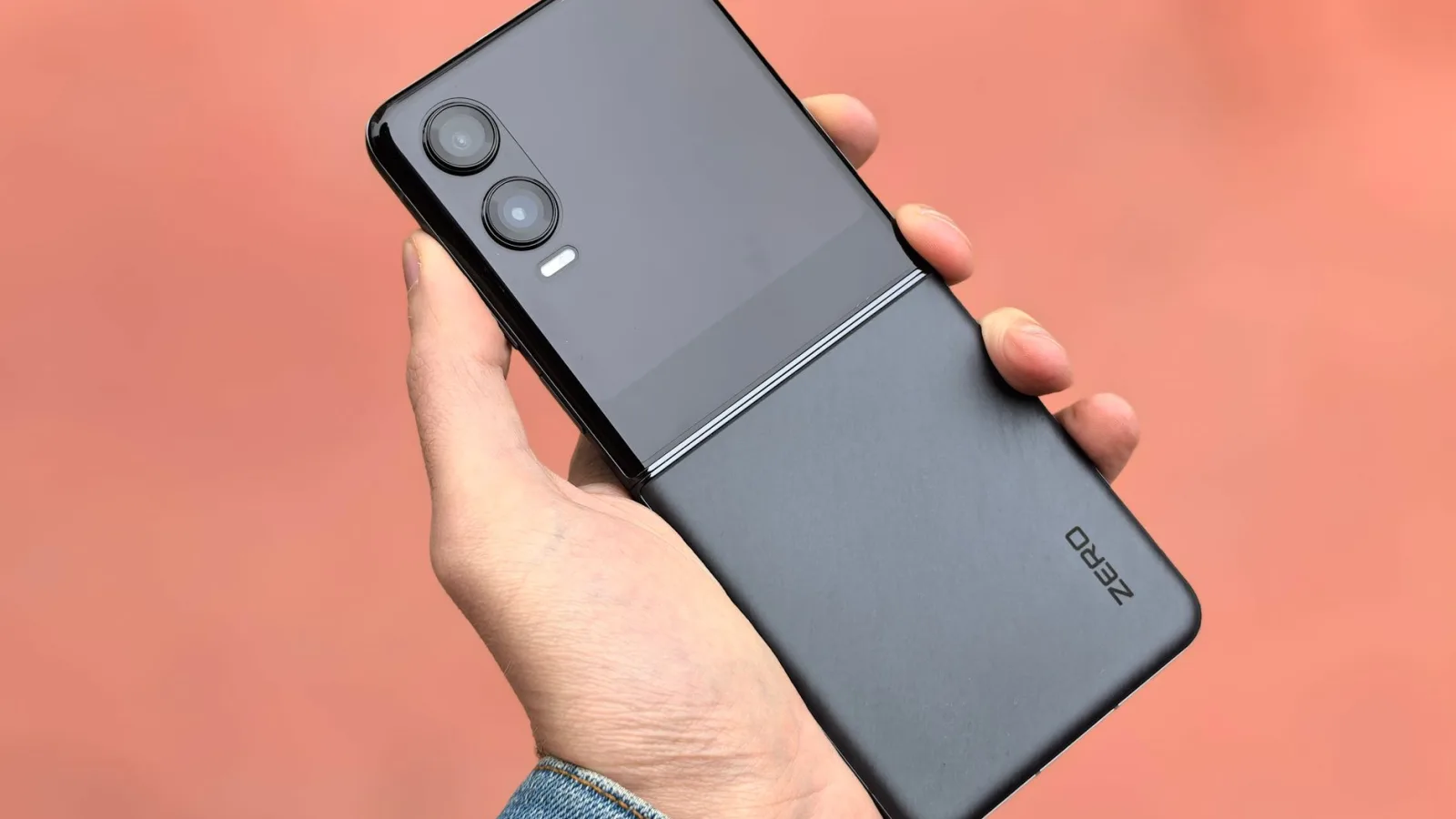
Honor has released the Magic V6, the latest version of its book-style foldable smartphone, priced at £1,500 in the UK before rising to £2,000 in August. The increase, £300 higher than the previous model’s launch price, reflects broader cost pressures affecting memory components across the smartphone industry, according to the manufacturer.
The device continues Honor’s approach of building a thin, tablet-like foldable phone with a prominent circular camera housing on the rear, distinguishing it from slimmer rivals such as Samsung’s Galaxy Z Fold series. Foldable phones fold in half, combining a compact phone-sized exterior with a larger internal tablet screen, a format that remains a small but growing segment of the premium smartphone market.
According to independent testing reported by the Guardian, the Magic V6 offers a top-tier Qualcomm Snapdragon 8 Elite Gen 5 processor, an IP68 water-resistance rating matching standard flagship phones, and battery life extending to almost two full days under typical use. These specifications place it competitively alongside non-folding flagship devices, addressing durability and stamina concerns that have historically affected foldable hardware.
However, the review found that software limitations undermine some of the hardware’s advantages. The device ships with MagicOS 10, Honor’s customised version of Android 16, rather than the newer Android 17 used by some competitors. Honor has committed to seven years of Android version and security updates for devices sold in Europe, a commitment increasingly common among manufacturers as regulators and consumers push for longer device lifespans.
The European Union’s ecodesign and energy labelling rules for smartphones and tablets, introduced in 2023, require manufacturers to provide security updates and spare parts for a minimum period after sale, part of a wider effort to reduce electronic waste and extend device usability. Extended update commitments from manufacturers such as Honor are, in part, a response to this regulatory environment, though update length alone does not guarantee software quality or consistency.
Testing identified several functional issues with the Magic V6’s software, including a non-functioning shortcut button intended to trigger AI tools or a torch function, a bug preventing Google’s Chrome browser from opening in split-screen mode, and messaging notifications that open as small floating windows rather than integrating with the folding display. The review also noted friction between Honor’s own app store and Google Play, with the former flagging apps installed through the latter as outdated.
These issues point to a broader challenge facing foldable phone manufacturers: adapting Android, an operating system designed primarily for single, fixed-size screens, to a flexible, dual-screen format. Google has gradually introduced foldable-specific features into Android, but manufacturers are responsible for integrating these into their own software layers, a process that has produced inconsistent results across the industry.
On camera performance, the review found the Magic V6 largely unchanged from its predecessor, with a 50-megapixel main sensor, a 50-megapixel ultra-wide camera showing improved distortion correction, and a 64-megapixel telephoto lens offering strong detail at moderate zoom levels. Two 20-megapixel selfie cameras are built into the folding and cover screens.
Repairability and environmental information were also assessed. Honor publishes spare parts pricing, including £609 for the internal foldable screen and £152 for the external screen, alongside labour and shipping costs. The company also offers a limited-time free screen repair scheme for devices purchased before August 2026. Such disclosures are increasingly required under EU rules mandating that manufacturers provide repair information and parts pricing to consumers, aimed at supporting longer device use and reducing reliance on full replacements.
The battery is rated to retain at least 80 per cent of its original capacity after 1,200 full charge cycles, a metric now commonly disclosed following regulatory requirements for battery durability labelling. Honor also publishes an environmental impact report for the device and offers trade-in and refurbished device schemes, reflecting wider industry moves toward circular economy practices, though the review noted the device contains limited recycled materials.
Priced against competitors, the Magic V6 sits below the Samsung Galaxy Z Fold 8 Ultra at £1,899 but above the Google Pixel 10 Pro Fold at £1,749, placing it firmly within an increasingly crowded premium foldable segment. Foldable phones remain a small proportion of overall smartphone sales but have become a focal point for manufacturers seeking to demonstrate technical differentiation in a market where conventional smartphone designs have changed relatively little in recent years.
The review’s overall assessment found that while the Magic V6 offers strong battery life, competitive performance and a slim, phone-like form factor when folded, its software shortcomings limit its appeal relative to more polished rivals. This gap between hardware capability and software refinement illustrates a recurring pattern in the foldable phone category, where manufacturers competing on chipsets, cameras and battery specifications have not always matched that progress with software stability.
As component costs continue to rise and regulatory requirements around updates, repairability and environmental disclosure become more embedded across the smartphone industry, manufacturers face growing pressure to justify high prices not only through hardware specifications but through consistent, well-supported software. The Magic V6’s reception suggests that, for premium foldable devices in particular, software polish is increasingly viewed as a decisive factor in consumer and critical assessments, alongside price and physical design.