A contentious agreement between Reform UK and France's far-right National Rally (RN) to return migrants from the UK back across the English Channel has triggered significant political backlash in France, with critics arguing the deal contradicts French national interests and sovereignty.
Reform UK has maintained that the memorandum of understanding, unveiled on Friday, was fully approved by the National Rally and personally signed off by its president, Jordan Bardella, amid mounting criticism from French politicians and media.
The agreement, presented by Reform UK leader Nigel Farage and Mr Bardella, who is the 30-year-old protégé of presidential candidate Marine Le Pen, appears to diverge significantly from Ms Le Pen’s long-standing policy of refusing to accept the return of individuals who have travelled to the UK from France in small boats.
On Monday, Ms Le Pen was questioned by journalists from France TV, the state broadcaster, regarding her position on the deal. She declined to comment at the time, indicating she would address the matter at a later point of her choosing.
In 2021, Ms Le Pen had publicly advocated for a revision of existing border agreements, specifically proposing that the UK should send people arriving by boat back to their countries of origin, rather than returning them to France.
Since the agreement's announcement, Mr Bardella has faced sharp criticism from various political parties in France. Benjamin Haddad, France’s Europe Minister, accused Mr Bardella of "submission," describing the deal as being "against our interests and sovereignty."
Certain French media outlets have also raised questions about the circumstances surrounding the agreement, suggesting that Mr Bardella may have been misled by Reform UK. Queries have been raised regarding whether the French translation accurately conveyed Mr Farage's implication that the National Rally would be prepared to accept all migrants returning by small boat.
However, a spokesperson for Reform UK refuted these suggestions, stating that the agreement was "signed off by both Bardella and the presidential team." The spokesperson further confirmed that the policy was explicitly included in both the French and English versions of the document, affirming that "both parties are fully on board."
Until recently, Mr Bardella had been considered a potential successor to Ms Le Pen in next spring's presidential election. He is now set to run as her future prime minister. This shift follows a July decision by a Paris appeal court to uphold Ms Le Pen’s conviction for embezzling European parliament funds, while reducing her ban from running for office, thereby enabling her candidacy.
Mr Farage has historically maintained a distance from Ms Le Pen but has cultivated a relationship with Mr Bardella over the past year. Speculation suggests Mr Farage may be planning to meet Ms Le Pen later in the autumn.
Previously, in 2014, Mr Farage rejected the idea of an alliance in the European Parliament, accusing Ms Le Pen’s party of having a history of "prejudice and antisemitism," a claim Ms Le Pen dismissed as slander. Last week, Mr Farage reiterated that he would not have entered into a deal with the party when it was led by Jean-Marie Le Pen, Marine’s father, a convicted Holocaust denier and co-founder of the Front National in 1972. Ms Le Pen expelled her father from the party in 2015, a move Mr Farage praised, stating she had removed "extreme elements."
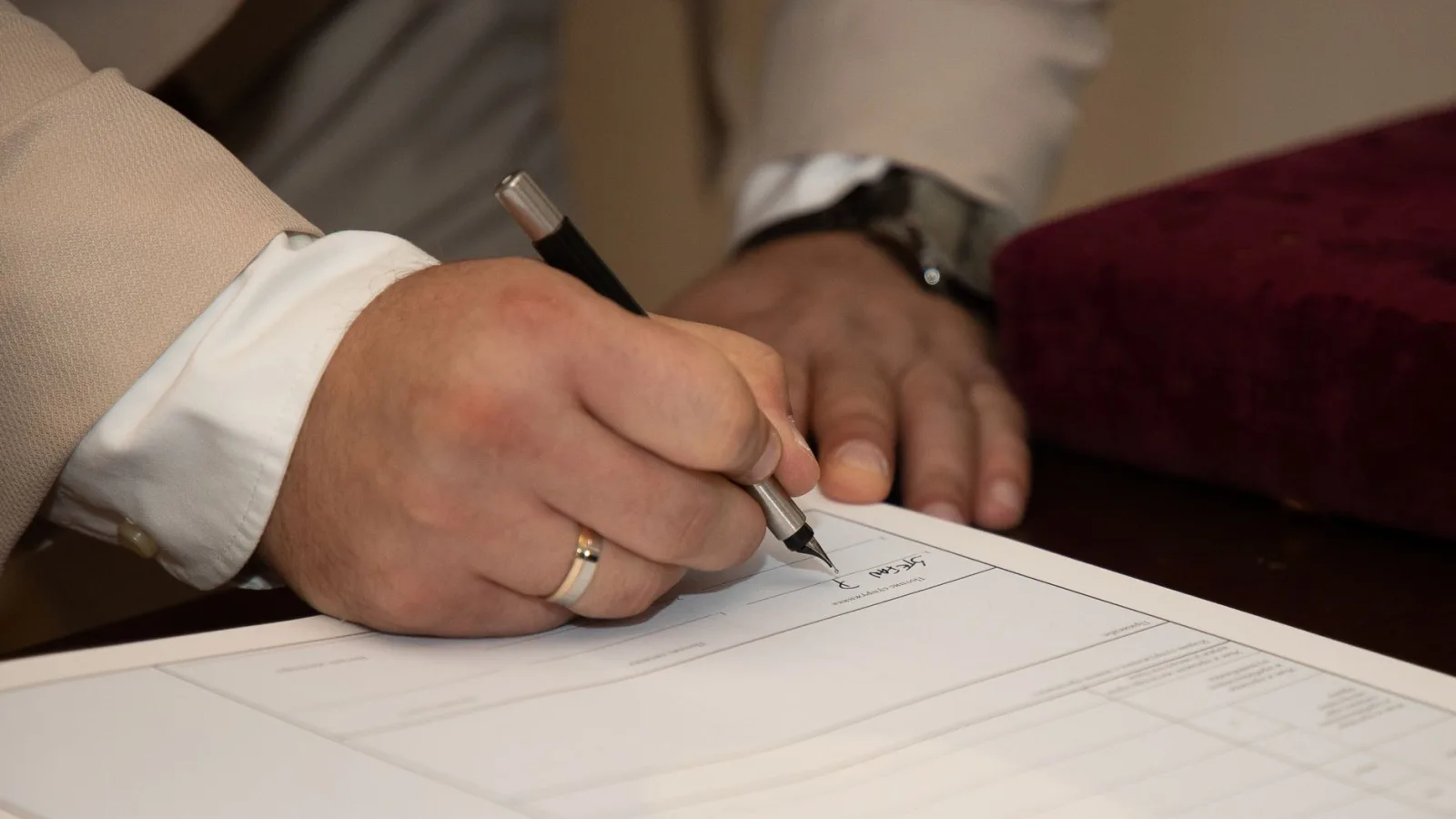
At the core of the current dispute in France is the precise wording of the document that Mr Farage presented for Mr Bardella to sign on stage in Birmingham, which he referred to as a memorandum of understanding.
Both the English and French texts of the document, displayed side-by-side during the unveiling, stipulate that if Mr Farage and Mr Bardella were to become prime ministers of their respective countries, the UK would intercept boats launched from the French coast, and France would then return the individuals onboard to their countries of origin.
Crucially, the English version of the text included an additional phrase: "France will ordinarily accept these persons" who would then be returned to their home country. This specific wording appeared to indicate that Mr Bardella was committing to accepting returned individuals in France, a position that seemingly contradicts the National Rally's established policy stance.
France TV reported that the National Rally has denied any significant controversy, characterising the text merely as a "declaration of intention" that would be subject to further refinement at a later stage. Speaking in Italy over the weekend, Mr Bardella suggested that a National Rally government would focus on preventing migrants from reaching France through much tougher border controls, thereby significantly reducing the numbers attempting to cross to the UK.
However, Mr Bardella's political adversaries in France have intensified their criticism over his decision to sign the immigration memorandum with Mr Farage on a public platform.
Sacha Houlié, an MP and ally of centre-left presidential hopeful Raphael Glucksmann, commented on social media platform X, describing the event as "a miserable episode where the whole of France could see Mr Bardella used as a doormat by the English far-right." He directly addressed the National Rally, stating: "You claim to be patriots, you’re cowards."
Gabriel Attal, the former centrist prime minister and a presidential candidate, also posted on X: "To applause from his party members, Nigel Farage made Jordan Bardella sign a memorandum to ensure that all migrants intercepted in the Channel are sent back to France. Either Jordan Bardella doesn’t understand English or he is shamefully weak when it comes to defending French interests. And I think he does understand English."
Édouard Philippe, a former prime minister and centre-right candidate, characterised the situation as an example of hypocrisy and division within Mr Bardella’s party. Mr Philippe suggested that Mr Bardella appeared to struggle to confront Mr Farage in order to "protect French interests."
Xavier Bertrand, the right-wing head of the northern Hauts-de-France region, similarly expressed his criticism on X, arguing that by agreeing that France alone would assume responsibility for returning individuals to their home countries, Mr Bardella was effectively "reducing France to the status of Britain’s subcontractor."
From the UK, Conservative Shadow Home Secretary Chris Philp commented on the deal, stating: "Reform UK’s deal with Jordan Bardella is a complete farce… Time and again, Reform prove they are fundamentally unserious with grand claims for the cameras, with none of the detail or hard work that might survive actual scrutiny."