The European Space Agency (ESA) has confirmed plans for a series of public engagement and scientific activities surrounding a total solar eclipse due to cross parts of Europe and the north Atlantic on 12 August 2026. According to ESA, the path of totality will pass over Greenland, Iceland, Spain and a small area of north-eastern Portugal, while much of the rest of Europe will see a partial eclipse.
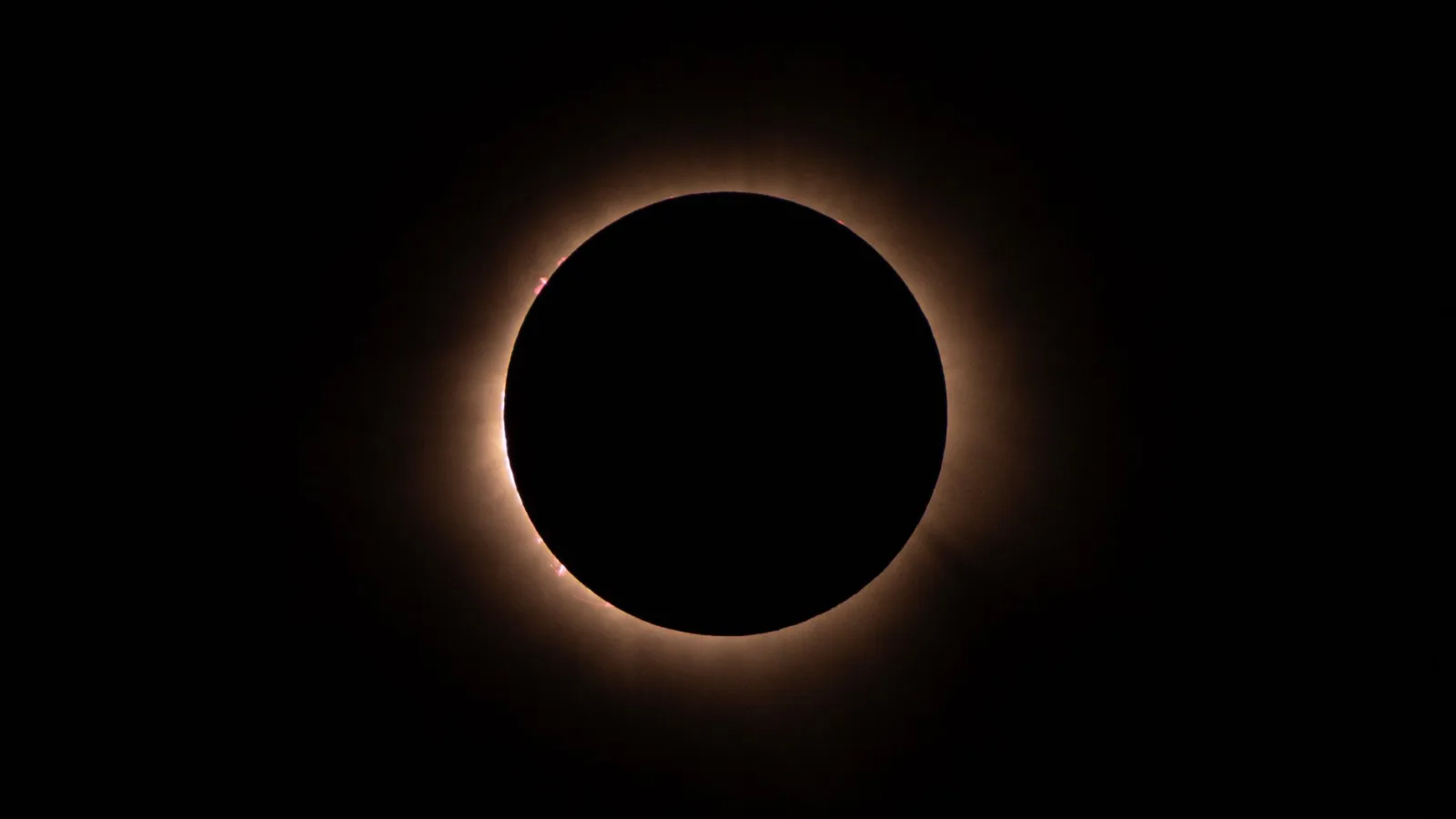
A total solar eclipse occurs when the Moon passes directly between the Sun and Earth, temporarily blocking most of the Sun's light and revealing its outer atmosphere, known as the corona. ESA notes that this will be the first total solar eclipse visible from mainland Europe since 2006, making the 2026 event a rare opportunity for large numbers of people across the continent to observe the phenomenon directly.
Spain is expected to see the largest area of totality in Europe, with the eclipse's path crossing the country from west to east before continuing over the Balearic Islands. ESA states that this will be the first total solar eclipse visible from mainland Spain since 1905, and the first of three eclipses due to be visible from the country between 2026 and 2028, a sequence that has prompted coordinated national planning around the events.
ESA's Director of Science, Professor Carole Mundell, said the eclipse offered a moment in which large numbers of people could engage collectively with astronomical phenomena. She said such events allowed the agency to connect its scientific missions with wider public interest, describing them as an opportunity to bring space science closer to society and to encourage engagement with ongoing research into the Sun and its effects on Earth.
The agency has said it intends to use the eclipse to highlight current European missions dedicated to studying solar activity and its interaction with the Earth's environment, including Solar Orbiter, Smile and Proba 3. These missions are part of a broader effort within European space science to understand solar behaviour, including phenomena that can affect satellite operations, communications infrastructure and power systems on Earth.
As part of its public programme, ESA will host a live broadcast from the Observatorio Astrofísico de Javalambre in Teruel, Spain, an astronomical facility situated within the path of totality. The broadcast, to be delivered in English via ESA Web TV and YouTube, will include explanations of the science behind the eclipse from ESA experts and invited guests. It will be hosted by Dame Dr Maggie Aderin, a space scientist and science communicator, alongside Professor Mundell and other contributors.
In addition to the broadcast, ESA is preparing a free public observation event in the city of León, in collaboration with the University of León and the local city council. The programme, which will be conducted in Spanish, is intended to allow residents to engage directly with solar scientists through talks and educational activities, while connecting with the agency's wider live coverage of the event. Further details on how members of the public can take part are expected to be released closer to the date.
To support wider public understanding, ESA has produced an educational kit available in both English and Spanish, designed for teachers and outreach professionals and adapted for different age groups. The materials include explanations of how eclipses occur, along with guidance on safe viewing practices. ESA has said this resource will be supplemented in the coming months by additional articles and videos covering the science of the eclipse and safe observation methods.
ESA has also contributed to the Spanish government's official eclipse initiative, known as the Trio of Eclipses, developing the scientific outreach section of the associated website in partnership with the Spanish Scientific and Advisory Committee for the Trio of Eclipses. The collaboration is intended to ensure consistent and accurate public information is available ahead of the three eclipses expected to be visible from Spain over the coming years.
ESA has stressed the importance of safe viewing practices during the eclipse. The agency has warned that looking directly at the Sun without proper protection can cause serious and permanent eye damage, and that standard sunglasses do not provide adequate protection. It has advised that certified eclipse glasses meeting recognised safety standards should be worn at all times during the partial phases of the eclipse. According to ESA, it is only safe to view the Sun without protection during totality, when the Moon fully obscures the solar disc, and eclipse glasses must be put back on as soon as the Sun begins to reappear.
Further updates, including detailed scheduling for public events and viewing guidance, are expected to be published on ESA's dedicated eclipse webpage in the coming months. The agency has said its overall aim is to help audiences, whether observing in person or remotely, understand both the visual spectacle of the eclipse and the underlying science driving current European research into the Sun's behaviour.
With the 2026 eclipse marking the first total solar eclipse visible from mainland Europe in two decades, the event is expected to draw significant public attention across the continent, while offering researchers a platform to communicate ongoing solar science to a wide audience.