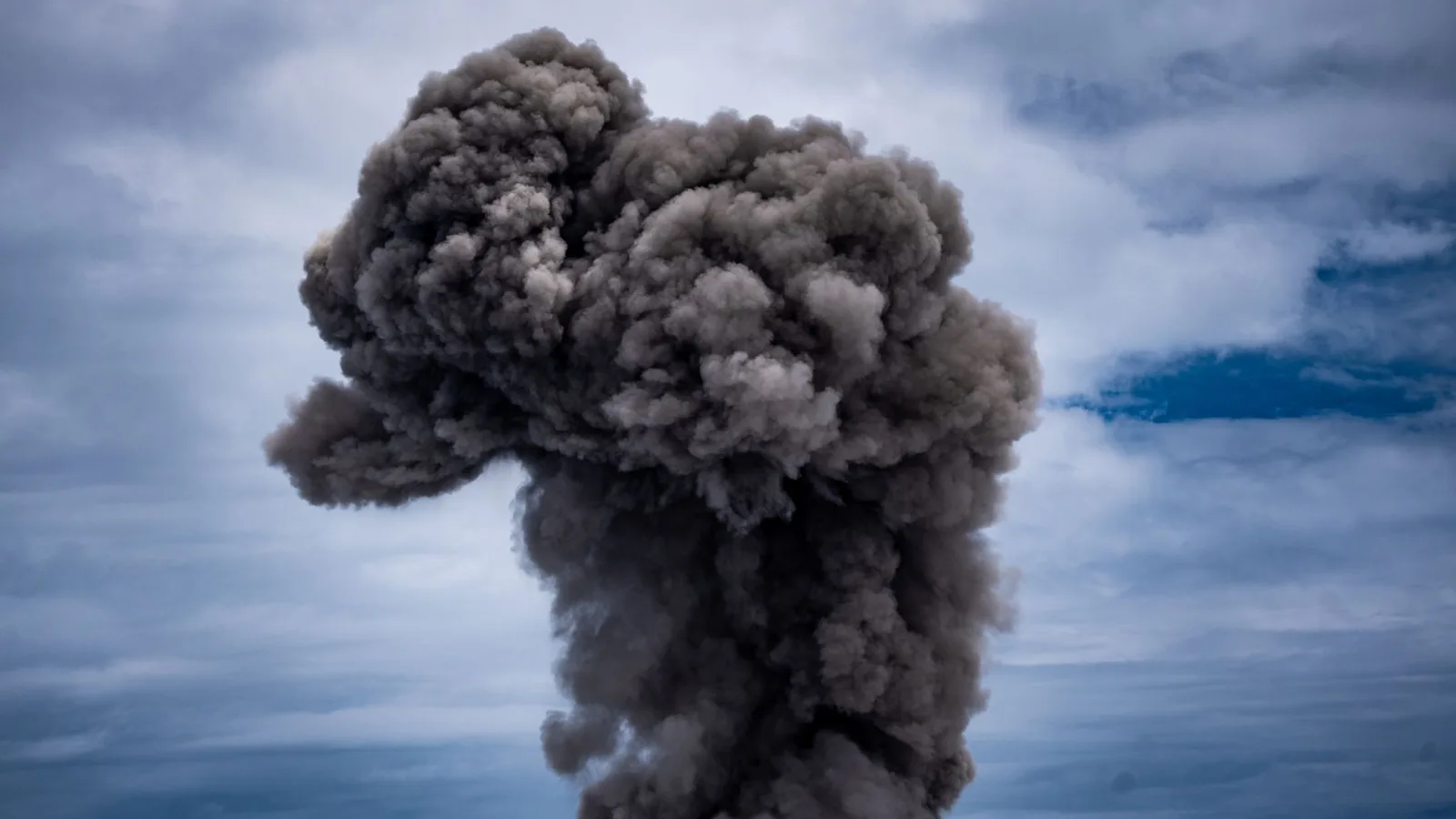
Indonesia has halted operations at five airports, including its main international hub in Jakarta, leading to the suspension of hundreds of flights due to an ash cloud from the Anak Krakatau volcano.
The eruption on Saturday produced lava and generated booming sounds audible up to 700 kilometres (435 miles) away, according to Indonesia's geology agency. The volcanic activity has also disrupted some school activities and fishing trips in affected areas.
Ash was detected in the airspace around Soekarno-Hatta International Airport near Jakarta, prompting authorities to suspend its operations. The transport ministry confirmed that a "paper test" conducted by airport authorities showed "positive results indicating the spread of volcanic ash" in the area. Authorities announced several extensions of the shutdown, with the airport initially scheduled to remain closed to flights until 1.30pm local time on Sunday.
Airport operator Angkasa Pura announced that the suspension at Soekarno-Hatta affected 301 flights, including 58 international services. Separately, the transportation ministry stated that more than 22,000 passengers and 209 flights were affected across various routes, particularly those bound to and from Singapore. Other international routes impacted included Doha, Sydney, and Kuala Lumpur. Additionally, local airport authorities reported that at least 16 domestic flights to Bali were cancelled.
Among the airlines affected, Singapore Airlines confirmed it had cancelled flights to and from Jakarta for the remainder of Sunday. Australian carrier Qantas also reported "disruptions to a number of Qantas services, including cancellations to and from Jakarta today."
A Qantas spokesperson stated: "Our meteorologists and operations teams are closely monitoring conditions in and around Jakarta and any impact on our operations. Safety remains our highest priority. We have contacted affected customers and are providing assistance. Services will resume when conditions allow."
For passengers facing delays and cancellations, the airport operator confirmed it was providing food and light refreshments, as well as buses to hotels, in coordination with the airlines.
The meteorological agency BMKG posted on its website that volcanic ash reached heights of up to 6,000 metres (20,000 feet) on the Java side of the volcano, and an estimated 15,000 metres on the Sumatra side and some parts of Banten province in Java.
Beyond air travel, the ash cloud led to other local disruptions. Several schools cancelled activities on Saturday after students and residents reported eye irritations from the ash, as detailed by local media outlet Kompas. Fishermen also cancelled their trips due to the conditions.
In response to the ongoing disruption, Indonesia's disaster mitigation agency, BNPB, announced plans to conduct a weather modification operation on Sunday to encourage rainfall. This operation could include cloud-seeding techniques.
BNPB chief Suharyanto told a press conference: "If it rains heavily enough, the volcanic ash that has been disrupting our daily lives since yesterday and continuing today will be washed away quickly."
Volcanic ash poses significant hazards to aircraft. It can cause severe damage to jet engines by baking onto hot internal parts, rapidly wearing out turbine blades, and clogging fuel and air systems. The abrasive particles can also damage pilots' windscreens, impairing visibility.
Anak Krakatau, which translates to "child of Krakatau," is situated in the Sunda Strait, separating the islands of Java and Sumatra. The volcano has been sporadically active since its emergence from the sea within the caldera formed after the devastating 1883 eruption of Mount Krakatau. That historical event stands as one of the deadliest and most destructive volcanic eruptions, claiming an estimated 35,000 lives.
In a precautionary measure, port authorities issued a directive prohibiting ships from approaching within a 3-kilometre radius of the volcano and advising all vessels passing through the strait to remain vigilant for potential dangers.