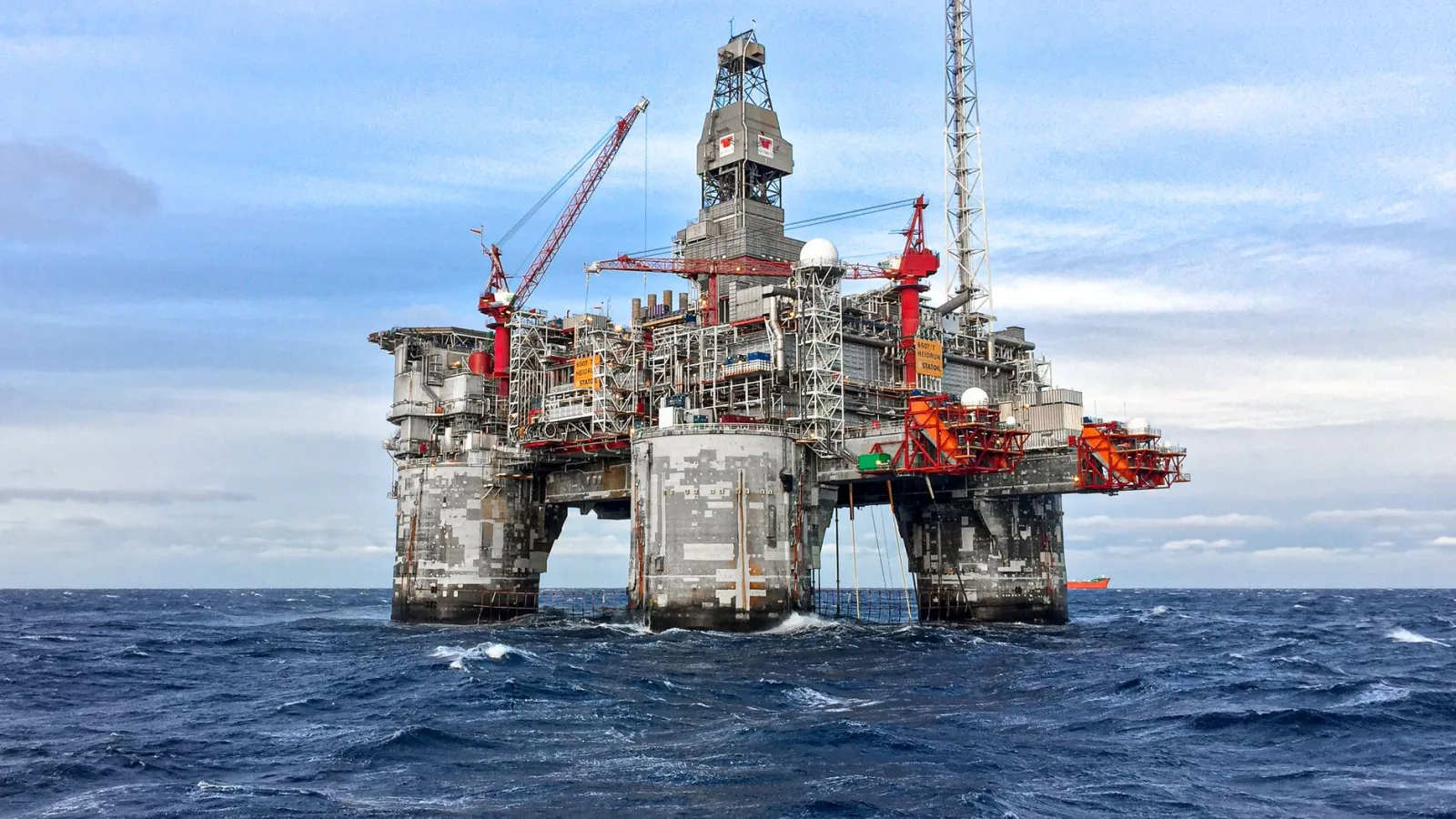
Companies operating in the UK North Sea should focus on building long-term resilience into their investment decisions rather than attempting to predict the outcome of the political debate over new drilling licences, according to a senior energy sustainability consultant.
Rob Ellinson, global energy sector lead at climate consultancy South Pole and a former geoscientist who began his career on rigs in Aberdeen, said the UK Continental Shelf (UKCS) has become the focus of polarised political positions, ranging from calls to maximise extraction to demands for an outright ban on new licences.
Writing about the sector, Ellinson said he was not seeking to argue for either position, noting that such decisions are a matter for regulators and policymakers. Instead, he said the more pressing issue for businesses is how to operate effectively while that political uncertainty persists.
He described the North Sea as sitting at the intersection of two competing realities. On one hand, the basin has been economically significant to the UK for decades, with licensed oil and gas production generating tax revenues, jobs and supply-chain value, while contributing to UK energy demand. On the other, the UK has set ambitious climate commitments centred on electrifying the economy, decarbonising heat and delivering clean power at scale.
According to Ellinson, the long-term direction of travel away from fossil fuels is broadly accepted, but the disagreement lies in the pace and shape of that transition over the next five to ten years, and how governments should balance energy security, affordability and sustainability during that period.
He pointed to recent volatility in global fuel prices as a key factor sharpening the debate. Energy costs, he said, cascade through the wider economy, affecting the price of food, clothing, housing and the operation of factories and public services, given the sensitivity of the UK’s energy pricing mechanism to external fuel markets.
Ellinson also highlighted what he described as a “who pays, and when” problem within the transition. He said the cheapest and most resilient energy system in the long run is not necessarily the cheapest option in the short term, since substantial upfront investment is required in grids, storage, flexibility and heat decarbonisation before the benefits of lower long-term costs and reduced exposure to volatile fuel prices are realised.
He said this dynamic has created political pressure to reduce energy costs quickly, which in turn has contributed to hesitancy over the timeline for shifting away from the existing energy system. This uncertainty, he argued, is making sanctioning and strategic investment decisions increasingly difficult for operators in the basin.
Ellinson linked this environment to recent shifts in ownership and strategy across the North Sea. He cited BP as an example of a major operator reassessing its exposure to the UKCS as part of a broader strategic reset and reallocation of capital, while noting that smaller, leaner operators have been acquiring late-life assets, where lower overheads, faster decision-making and different investment timeframes can allow them to extract value.
For companies operating in the basin, Ellinson said government policy represents a material short-term financial risk. However, he argued that the appropriate response is not to attempt to forecast the UK’s future political direction, but to focus on managing transition risk directly.
He said South Pole’s consistent advice to operators is that decisions made today need to remain economically resilient over a 20-year horizon, and should be tested against multiple demand scenarios grounded in climate science, rather than optimised around a single short-term policy signal. He added that this is an area where the consultancy is seeing significant demand for support from companies in the sector.
This approach, he said, involves taking a long-term view of strategy that extends beyond electoral cycles, and using a range of climate and transition scenarios to stress-test the resilience of investment decisions rather than planning for a single anticipated policy outcome.
Ellinson said companies should also translate these scenarios into concrete financial implications, including the risk of asset impairment and write-downs, the cost of capital, decommissioning provisions, demand risk and reputational or credibility risk. He recommended building flexibility into investment portfolios through phased projects, capital gates and “no regrets” decisions that retain value across a range of possible futures.
He further suggested that companies should continue to treat sustainability standards and disclosure expectations as a structural part of their strategy, even in periods when the political environment appears to be moving in a different direction.
Ellinson said the future of the UK North Sea is likely to remain contested, and that for companies operating in the basin, navigating this uncertainty is less about choosing a political side and more about ensuring decisions remain resilient as the political, economic and energy landscape continues to evolve.